

My Mother Followed The Standard Osteoporosis Protocol For 8 Years.Her Hip Broke Anyway.

Resident Bone Health & Postmenopausal Recovery Expert


I'm sitting in my kitchen, listening to the radio argue about whether the new bakery downtown is worth the line, and all I can think about is the morning fourteen months ago when my phone rang at 9:42 AM and my daughter was already screaming.
Tuesday, October 14th, 2024. 9:42 AM.
I didn't even get to say hello.
"MOM. Mom — it's Grandma, you have to come, you have to come NOW—"
Megan was sobbing so hard the words were coming out in pieces.
"She's on the floor — she was on the kitchen floor when I got here, she can't get up, she CAN'T GET UP, Mom—"
I was already standing. I don't remember standing. My hand was gripping the edge of the counter and I couldn't feel it.
"There's blood — there's blood on the cabinet, she hit something going down — Mom she's making this sound, this sound I've never heard her make, please, how far away are you—"
I heard it then. Underneath Megan's voice. My mother. Seventy-three years old. Making a sound I had never heard a human being make.
I don't remember the drive. I remember red lights. I remember leaving my car door open in the hospital lot.
The waiting room clock said 11:20 when David found me. I had been standing — not sitting, standing — in the same spot for over an hour, watching the double doors. Every time they opened my whole body lurched toward them.
When the surgeon finally came out, he was still in his scrub cap. He looked at me, then at David, then back at me.
He said it quietly. Almost like he didn't want the words in the air.
"She's stable. We did what we could. But I'll be honest with you — the bone quality in there was poor. There wasn't much to work with."
Not much to work with.
I felt David's hand close around mine. I don't remember him reaching for it.
Three weeks. That was the part I couldn't stop hearing.
Three weeks earlier my mother had called me on a Sunday and said, "Susan, I feel fragile lately. I don't know how else to say it. I just feel… fragile."
And I had told her to mention it to her doctor at her next appointment.
She never got to the next appointment.
She reached for something in her own kitchen on an ordinary Tuesday morning — and her hip simply gave out underneath her.
But we both knew. This wasn't a fall. This was the body of a woman who'd done everything her doctors told her — and her hip gave out reaching for a coffee tin anyway
That Night Was My Wake-Up Call.

It was past 9 o'clock by the time David and I finally got home from St. Mary's. That night, we sat at our own kitchen table and didn't say much for a long time.
I'm 54 years old.
David and I have been married twenty-six years. Two kids — Megan in Portland, Tyler still finishing his last year of grad school. The house we bought when I was 31 is finally paid off. David retired from the school district two years ago after thirty-one years as a high school principal. I'm semi-retired from a long career in commercial real estate. We were supposed to be entering the easy decade.
Then my mother's hip gave out in her own kitchen.
And the next morning, I went into my filing cabinet and pulled out every DEXA scan I'd had in the last six years.
Because here's the part nobody tells you when you're standing in a hospital waiting room at 11:20 in the morning.
My mother had been doing everything right.

Calcium every day for nineteen years. Bisphosphonates exactly as prescribed. Annual DEXA scans. Annual phone calls from her rheumatologist telling her the numbers were stable, the protocol was working, see you next year. She had followed that protocol the way you follow doctor's orders when you trust the system — completely, without question, for almost two decades.
And then one ordinary Tuesday morning her hip gave out reaching for a coffee tin.
I was six years into the exact same protocol.
T-score minus 1.4 in 2019. Minus 1.6 in 2021. Minus 1.8 in 2023. My rheumatologist had slid that last result across the desk and said the same sentence my mother had been hearing for nineteen years. "Osteopenia. Nothing alarming. Keep taking your calcium and your D3. Come back in two years."
I sat at that kitchen table with my scans spread out in front of me, and David didn't say anything. He just looked at the same downward slope I was looking at.
And the words I'd been swallowing since the hospital finally came up.
I am not walking my mother's path.
I told David what I was thinking. He didn't argue. He didn't tell me I was being dramatic. He just nodded once and said, "Okay. So what are we doing instead?"
That's where it started.
The "Solutions" That Didn't Move The Needle At All

First came the weight-bearing exercise. I started lifting four days a week — squats, kettlebell deadlifts, the whole protocol every osteoporosis blog swears by. Five months in, my quads were stronger and my posture was better. My bone turnover markers hadn't moved a single point.
Then came the supplement aisle. Calcium-magnesium blends. A "complete bone formula" with twenty-three ingredients. Collagen powder. A "K2-rich" formula with the wrong form of K2 at a third of the clinical dose. I spent over $480 across four bottles. Four retests. Not one number on my bloodwork changed — and my cabinet started looking like a pharmacy.
Then came the diet overhaul. Cut coffee, cut sodium, added prunes and sardines and enough leafy greens to feed a rabbit. I lost five pounds I didn't want to lose. My CTX — the marker that tells you demolition is outpacing construction — was still elevated. The scaffold was still collapsing.
I was doing everything right and going nowhere. My follow-up DEXA was eight weeks away. I could already see my rheumatologist sliding the result across the desk: stable, see you in two years.
That's when David — who'd been patient up to that point — put his foot down. I wasn't going back to Dr. Tran. He'd already looked it up: there were doctors who went deeper than general rheumatology — endocrinologists who specialized in the hormonal machinery behind bone loss. He called his brother for a name and got me in on a cancellation slot that same week.
The Endocrinologist's Warning Changed Everything
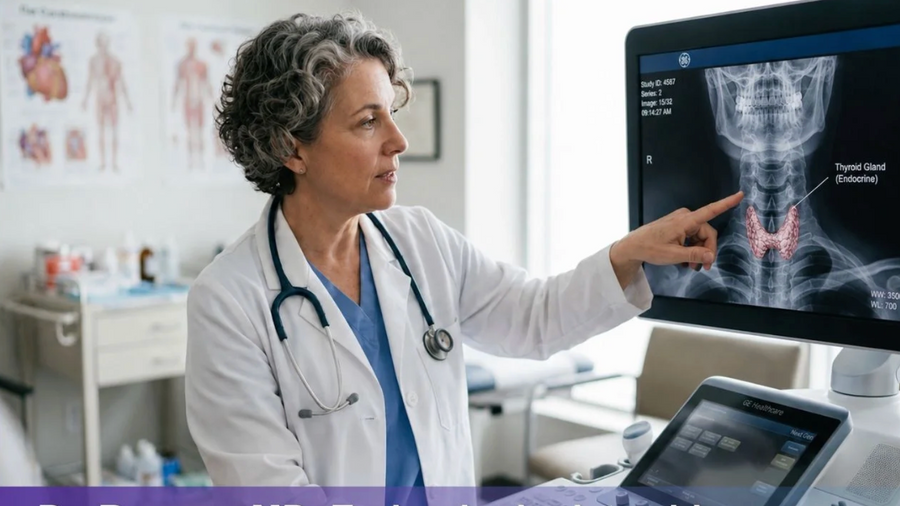
"You have early-stage scaffold deterioration," Dr. Reeves said. "Your bone is losing density because the collagen framework underneath the mineral is breaking down — and nothing you've taken has addressed it."
She explained it simply. Bone isn't primarily a mineral structure. Roughly 90% of its organic framework is Type I collagen — a flexible protein mesh that lets bone absorb pressure instead of snapping under it. Collagen is the scaffold. The rebar. Calcium is just the concrete poured around it.
And calcium without scaffold, she said, is concrete poured onto sand.
No wonder my numbers had been sliding for six years no matter what I took.
The Warning Signs Your Doctor Isn't Tracking

Dr. Reeves explained that bone loss does more than show up as a scary number on a scan. Your skeleton is losing structural integrity 24 hours a day — silently, years before a DEXA catches it.
- Height loss you haven't measured
- A DEXA that's "stable" but never improves
- Years on calcium with nothing to show for it
- Aches in the spine, hips, wrists with no clear cause
- A family history of fractures
- Never once having had your bone turnover markers tested
The scariest part? At menopause, estrogen drops — and estrogen is the signal that tells your bone-building cells to maintain the collagen scaffold. When that signal goes quiet, collagen production inside the bone can fall by up to 10% in the first five years alone. The scaffold deteriorates from the inside out, while the scan still says you're fine.
"Unfortunately," she added, "bone medicine hasn't really advanced in thirty years. We have bisphosphonates that slow the cells breaking bone down. We have calcium. We have hormone replacement. But none of them rebuild the collagen scaffold — and that's the thing that's actually collapsing."
She told me the part most people never hear: "Patients don't realize the scaffold is the problem. They think if the calcium number looks fine, the bone is fine. It isn't. The structure underneath is what fails."
She ran a blood panel that day — bone turnover markers called CTX and P1NP. Tests Dr. Tran had never once ordered in six years.

The results came back four days later.
CTX — the marker for how fast bone is being broken down — came back at 0.78. Elevated.
P1NP — the marker for how fast new bone is being built — came back at 24. Low.
Demolition outpacing construction. In real time. Underneath a number my doctor had called stable six years running.
Dr. Reeves was clear about one last thing. The upstream fix — something that actually reactivates collagen synthesis inside bone — wasn't a drug. It wasn't something she could write on a prescription pad. Most patients never even learn it exists.
The Simple Search That Changed Everything

I'd spent eight months reading bone research at midnight. So by the time David and I got home from St. Mary's that night, I knew where to look. I sat down with my laptop looking for anything that could actually rebuild the collagen scaffold — not just add more mineral. At first I hit the same dead ends I always did. Then something caught my attention: a landmark paper in the journal Bone testing a bioavailable form of silicon on human osteoblasts, the bone-building cells.
Unlike calcium, which just adds more mineral to a failing structure, this form of silicon worked upstream — it stimulated the osteoblasts themselves to produce Type I collagen, the protein scaffold calcium is supposed to anchor to.
The results stopped me cold:
Calcium doesn't rebuild the scaffold. Bisphosphonates don't rebuild the scaffold. Collagen powder doesn't rebuild the scaffold.
They manage the mineral while the structure underneath keeps collapsing.
But here's the catch.
Almost every bone supplement on the shelf uses generic silica — a cheap, barely-absorbed form — at trace amounts of 5 or 6mg. Just enough to print "silicon" on the label. Zero effect on the scaffold.
The form and dose that actually moved bone density in the research was a bioavailable silicon at 60mg. And almost no brand on the market sold it at that strength.
I kept digging. And I found one.
A small company called Healthletic. Their product was called Bones[01] — the only one I could find that hit the clinical dose from the studies. 60mg of bioavailable Mesoporosil silicon, plus vitamin K2 as MK-7 and D3 at the research doses. Third-party tested. 60-day money-back guarantee.
I was skeptical as hell. I'd already wasted $480 on four supplements that did nothing. But I figured: 60-day guarantee. Worst case I get my money back. Best case I don't end up where my mother is.
I ordered their 2 two bottles that night.
The First Three Weeks Changed Everything

When the bottle arrived, I honestly wasn't expecting much. I'd been burned four times already.
Two capsules every morning with food, like the label said. David made me log it every single day in a spreadsheet. He's a retired school principal. He's annoying like that.
Day 1: Nothing.
Day 7: Nothing.
Day 14: Nothing. By now, with the other four supplements, I'd already quit.
Day 21: Still nothing. And I'll be honest — I had the bottle in my hand over the trash can.
But then I remembered what Dr. Reeves had told me about why the other four had failed. They weren't rebuilding anything. And the studies that actually moved bone density? They didn't run for three weeks. They ran for six months, twelve months. Collagen doesn't rebuild on a schedule that's convenient for an impatient woman standing over her kitchen trash can.
So for the first time, I did the thing I'd never done with a single one of the other four bottles.
I committed to the full clinical timeline.
I booked the bone turnover marker retest for week 9 — CTX and P1NP, the same blood tests Dr. Reeves ran at baseline. I put it in the calendar. And I kept taking the capsules.
Not because I felt anything.
Because for once, I understood that not feeling anything yet was exactly what was supposed to be happening.
My 6-Month Journey With Bones[01]

After Week 9 The marker retest — the same CTX and P1NP panel Dr. Reeves ran at baseline. At baseline, my CTX (the breakdown marker) was 0.78 and my P1NP (the building marker) was 24 — demolition winning, construction barely showing up. The week 9 results came back four days later. CTX down to 0.61. P1NP up to 38. For the first time, the gap was closing. I read the email standing at the kitchen counter and had to sit down.
After Week 12 It wasn't just the bloodwork. I'd started sleeping through the night — no more lying awake at 3 AM running through the geometry of every staircase and icy sidewalk. One afternoon I walked the dog past the park and realized halfway home I hadn't once looked down at my own feet.
After Month 4 David said something at dinner I didn't have an answer for. He said I'd stopped bracing. I asked what he meant. He said for over a year I'd put a hand on the counter, the wall, the back of a chair — every time I stood up or sat down. He hadn't seen me do it in weeks.
After Month 6 The repeat DEXA scan. T-score up from minus 1.8 to minus 1.5 — lumbar spine bone density up 1.57% from baseline. The first improvement in six years of scans. Dr. Reeves reran the markers too: CTX down to 0.49, P1NP up to 52 — both, she said, in the range she sees in women a decade younger. I didn't tell Dr. Tran what I was taking. I just watched her look at the screen, look at me, and say, "Whatever you're doing — keep doing it."
That was eight months ago.
I'm still taking Bones[01] every single morning. My markers are holding. My last scan moved in the right direction again. I have energy I didn't have at 49 — I booked a hiking trip with my sister, the first one in three years.
And most importantly:
I am not on bisphosphonates. I am not waiting for the ordinary morning my mother's Tuesday became.
I broke the cycle.
Why Bones[01] Actually Works (While Everything Else Failed)

Unlike calcium and bisphosphonates, which only ever work on the mineral, Bones[01] works on the scaffold — the collagen structure underneath the mineral. But more importantly, it's the only supplement I could find that delivers what I started calling the Collagen-First dose of bioavailable silicon — 60mg per daily serving.
That specific number matters more than almost anything else on this page. Here's why:
- 5–6mg generic silica: what almost every "bone support" formula uses. Trace amount. Enough to print "silicon" on the label. Zero measurable effect on bone density.
- 60mg bioavailable silicon: the dose from the research that increased collagen production in bone-building cells by up to 75% and raised bone-formation markers in postmenopausal women.
That's a 10x dose difference — and it's the line between "ingredient on a label" and "ingredient that actually rebuilds the scaffold."
And almost every brand on the shelf sells the 5–6mg trace amount because real bioavailable silicon costs far more to manufacture, and "contains silicon" reads exactly the same on a bottle either way.
Bones[01] is one of the only products I could find formulated at the clinical doses from the studies that actually work:

✅ Mesoporosil® Bioavailable Silicon — 60mg — the upstream fix nothing else on the shelf addresses. Rebuilds the collagen scaffold itself, at 10x the dose of the generic-silica trace amount most brands hide behind.
✅ Vitamin K2 as MK-7 — 180mcg — directs absorbed calcium into bone matrix instead of leaving it to settle in your arteries. The long-acting form at the clinical dose — not the cheap MK-4 token amount most formulas use.
✅ Vitamin D3 — 2,000 IU — opens calcium absorption in the gut, where up to 85% of dietary calcium otherwise passes straight through you. The research-backed threshold dose, not a 400 IU label-filler.
✅ Third-Party Lab Tested — Healthletic publishes the actual Certificate of Analysis on their website. You can verify identity, potency, and purity yourself before you buy — most brands never let you.
✅ Pharmaceutical-Grade Manufacturing — made in Europe, every batch verified. The kind of standard most supplement companies don't come anywhere near.






The Offer That Makes It A No-Brainer

Look — the 60mg Collagen-First formulation of Bones[01] makes it the only bone supplement I could find that actually rebuilds the scaffold instead of just managing the mineral.
While premium bone-health protocols at clinical doses can run $90 or more at specialty health stores, Healthletic is making this accessible directly to readers of this article.
Right now, you can grab Bones[01] at up to 49% OFF as part of their official promotion. Plus, you get:
✅ Free shipping on bundles
✅ 60-day money-back guarantee — if you don't feel stronger, more confident movement, they refund you. No questions, no hassle.
✅ Third-party tested & certified — Certificate of Analysis published on their website
✅ No auto-renewing subscriptions — one-time purchase, that's it
👉 CLAIM UP TO 49% OFF BONES[01]Think About It This Way

• Lifetime bisphosphonate prescription (plus side effect management): $50–$150/month forever
• Bone turnover marker bloodwork, ordered reactively after a fracture: $300–$600/year
• A single hip fracture repair — the path my mother is still recovering from: $30,000–$50,000
• The emotional cost of your family quietly watching your every step: Priceless
Or grab Bones[01] today for a FRACTION of the cost (with your discount) and actually rebuild the scaffold instead of managing a number on a scan for the rest of your life.
👉 CLAIM UP TO 49% OFF BONES[01]The price of getting it wrong is not money. It is the ordinary Tuesday morning when you reach for something in your kitchen.
→ GRAB THE 5-BOTTLE BUNDLE FOR $142.80David's Final Words
Last Sunday morning, David and I were sitting on the back porch with our coffee. The first cold snap of the year had come through overnight. The grass had frost on it.
He looked at me and said something that nearly made me cry:
"You walked across the parking lot yesterday without looking at your feet. I've been watching your feet for fourteen months — every curb, every step, every patch of ice. I never told you I was doing it. I stopped about three months ago. You didn't notice I'd stopped. That's how I knew."
That's what Bones[01] gave us back. Not just a T-score moving in the right direction — it gave my husband back the mornings he wasn't quietly bracing for a phone call. It gave my kids back a mother they don't have to start managing the way I started managing mine. It gave me back the version of an ordinary day where I don't calculate every staircase before I take it.
I broke the cycle my mother couldn't break.
Don't let silent bone loss steal another year from you or the people who love you.
👉 ORDER BONES[01] TODAYFAQ


Has anybody tried Healthletic Bones[01]? I keep seeing it on bone health forums but I've been burned by four other supplements already.
Eight months in. Bone turnover markers moved at week 9. DEXA at six months showed my first improvement in five years. The Mesoporosil form of silicon is the difference. Generic silica didn't do anything for me — this one did.
I'm a retired ICU nurse. I started recommending this to friends after seeing my own CTX drop 40% in 12 weeks. Most bone supplements don't even contain the upstream ingredient at a clinical dose. This one does — 60mg of Mesoporosil, not the trace 6mg most brands sell.